Short Drama
A Familiar Stranger: Eighteen Episodes, Two Faces, One Revenge
The face-swap drama that proved a ten-minute episode can carry a full revenge plot.
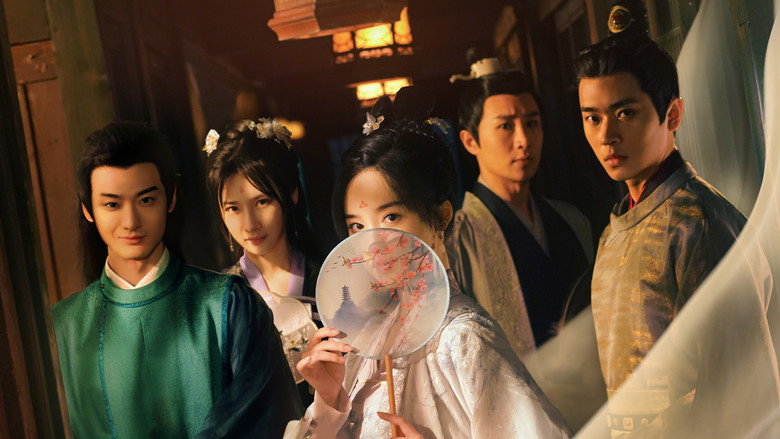
At a glance
- Chinese title
- 虚颜 (Xū Yán)
- Format
- 18 episodes, about 12 minutes each
- Genre
- Historical romance, identity swap
- Setting
- A minister's household and the capital's painting studios
- Official streaming
- Viki, iQIYI (region dependent)
- Best for
- Viewers who want a full plot in three hours
What it is about
Shi Qi is a portrait painter with a quiet life and a missing sister. Shen Qin is the daughter of the prime minister, about to be married off as part of a political arrangement she does not want. On the night before the wedding, Shen Qin forces Shi Qi into a face swap: the painter wakes up as the bride, and the bride walks away with the painter's identity.
The switch is not a comedy premise. Shi Qi has to survive a household where every servant knows the real daughter's habits, a fiancé who notices small inconsistencies, and a political family that will kill to protect its position. Her only advantage is that nobody looks closely at a woman they think they already understand.
Who should watch it
Best for: viewers who want a compact historical thriller with a romance attached.
- You have three hours and want a complete arc.
- You like identity plots where the disguise creates real danger.
- You are new to Chinese mini-dramas and want a well-made example.
Skip it if you dislike body-swap logic or want a large-scale palace drama. The budget is small and stays in a few rooms.
Three reasons to watch
1. The swap is a survival problem
Most face-swap stories use the new face to access money or status. Here it is a trap. Shi Qi inherits enemies she has never met, a reputation she did not build, and a husband who is testing her. The tension comes from maintenance rather than ambition.
2. Every episode ends on a decision
At twelve minutes, there is no room for a slow middle. Episodes end on a choice, a discovery or a lie that has to be maintained. It plays more like a serialised thriller than a romance, which is why it holds up to a weekend binge.
3. The romance is built on observation
The male lead falls for the person, not the face, and the show earns that by making him notice behaviour: how she holds a brush, which side of the room she stands on, what she refuses to say. It is a small, well-executed idea that most full-length dramas would stretch to forty episodes.
The hidden culture detail
The Chinese title Xu Yan means "false face" or "empty face", and it carries a second meaning: a facade put on for society. In a household where a daughter's value is her marriageability, the face literally is the asset. The drama's horror is not that Shi Qi loses her identity, but that the identity she is given is worth more than the one she had. That trade is the quiet theme under the revenge plot.
How to watch it without losing the thread
Two characters wear the same face for most of the run, so track them by behaviour, not appearance. Shi Qi is the one who paints, hesitates before speaking to servants and does not know the household routines. Shen Qin, in the painter's body, moves through the capital with a confidence that does not fit her new station.
The show also assumes you understand that a minister's daughter is a political instrument. Marriage in this setting is a treaty between families, not a personal choice, which is why the swap is possible at all: the groom's family cares about the alliance more than the individual.
Who is who after the swap
Because the two women share a face for most of the series, the production relies on behaviour to keep them apart. Shi Qi, in the bride's body, is physically careful. She stands slightly away from people, keeps her hands still and looks at rooms the way a painter looks at a composition. Shen Qin, in the painter's body, is the opposite: she occupies space, gives orders to servants who outrank her, and forgets that she no longer has the status to do so.
The household is a second map of the disguise. The mother-in-law notices manners, the maid notices routine, and the fiancé notices attention. Each one tests a different layer: etiquette, habit and desire. A scene where nothing seems to happen is usually one of these tests being administered.
There is also a third woman in the story, the missing sister, and the search for her is the engine that keeps Shi Qi from simply running away. The sister thread explains why the painter accepts the swap in the first place, and it pays off in the final third.
If you lose track, use voice and posture rather than costume. The show dresses both women similarly on purpose, and the point is that identity in this world is a performance that can be copied but not quite maintained.
Where to watch
Licensed internationally through Viki (Rakuten) and iQIYI. For a longer historical romance with the same identity anxieties, read our The Story of Minglan guide.
Where to watch officially
These buttons open the licensed platform's own search page for this drama. Availability changes by country, so the platform page is the final word on subtitles and regions.
No torrents, mirrors or Google Drive copies. If a link ever lands somewhere unofficial, tell us at yqin1090@gmail.com and we will replace it.