Short Drama
An Ancient Love Song: A Love Story That Runs Backwards
Fourteen short episodes, one impossible timeline, and a romance that only works because it runs in reverse.
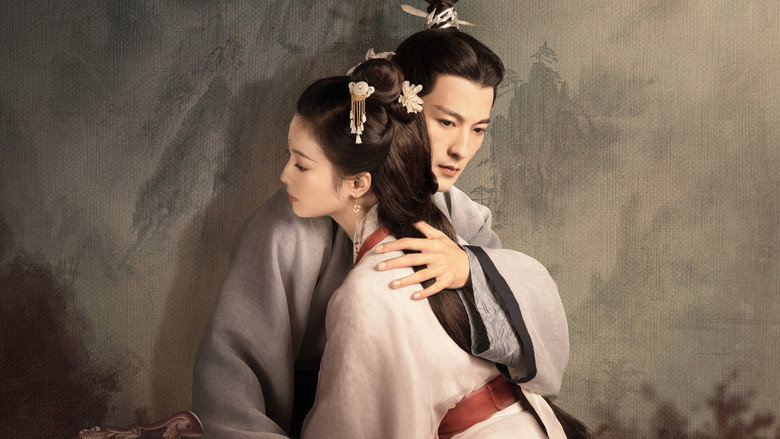
At a glance
- Chinese title
- 古相思曲 (Gǔ Xiāngsī Qǔ)
- Format
- 14 episodes, about 27 minutes each
- Genre
- Historical romance, time travel
- Setting
- A fictional dynasty in its final years
- Official streaming
- Viki (region dependent)
- Best for
- Viewers who want a complete story in one weekend
What it is about
Shen Bu Yan is a history student who has spent years studying a queen remembered as a monster. When she is pulled into the past, she meets the woman before the records turned her into a villain, and discovers that the two of them are moving through time in opposite directions.
Each time they meet, one of them is older and the other is younger. The show turns that single rule into an entire structure: every reunion is a first meeting for one person and a last meeting for the other. The result is a romance that the audience understands better than either character does.
Who should watch it
Best for: viewers who like clever structures more than long arcs.
- You want a complete historical romance in about six hours.
- You enjoy time-travel rules that are actually consistent.
- You like tragic endings that are earned rather than decorative.
Skip it if you need a large cast or palace scheming. This is a two-hander with a small supporting circle.
Three reasons to watch
1. The gimmick is the plot
Most time-travel romances use the mechanic to reset mistakes. This one uses it to make understanding impossible. The audience pieces the relationship together in chronological order while the characters experience it out of order, and the emotional payoff comes from that gap.
2. It looks expensive on a small budget
Short dramas usually show their budget in crowded scenes and cheap sets. This one stays intimate: a library, a courtyard, a riverbank, a throne room shot from careful angles. Restraint makes the production feel larger than it is.
3. Fourteen episodes is the right length
There is no filler, no secondary romance to pad the middle, no episode built around a misunderstanding. Every chapter moves the two timelines closer together, and the final episode recontextualises the first.
The hidden culture detail
The Chinese title uses xiangsi (相思), a word for longing that comes from classical poetry and literally means "mutual thinking". It describes a love sustained by absence rather than contact, which is exactly what the drama depicts. English subtitles usually render it as "love song", but the emphasis is on the ache of remembering someone who may not remember you. Once you know that, the title stops being decorative and starts describing the mechanism of the plot.
How the timeline works
The show never explains the rule in dialogue, which is why some viewers bounce off the first two episodes. A useful way in: treat each meeting as a shared point on two different calendars. Shen Bu Yan arrives early in the dynasty's decline; the queen she meets is living through its end. Their ages move in opposite directions, so information flows backwards.
That structure means spoilers are built in. A line that sounds like a greeting in episode two can be a farewell in episode twelve. Pay attention to what each character already knows rather than to what the plot is hiding.
Reading the timeline backwards
The first episode is, for one of the two leads, the end of the relationship. That is not a spoiler; it is the premise, and the show expects you to feel the asymmetry before you understand it. A line that sounds like a cautious introduction is, for the other character, a reunion they have waited years for.
Three things make the structure readable. First, watch age: the same character is aged differently depending on which end of the timeline they are on. Second, watch recognition: one lead always knows more than the other, and the gap tells you where you are. Third, watch objects. A hairpin, a book, a torn page reappears in different conditions, and the condition dates the scene more reliably than any caption.
The show also withholds one crucial piece of information until the final episode, and it is not a twist in the usual sense. It is a translation: what a phrase meant the first time it was spoken. Once you have it, the earlier episodes reorganise themselves. That is why rewatches are common, and why the drama works better as a six-hour whole than as fourteen separate chapters.
If you are watching with someone who has not seen it, resist explaining the rule. The confusion in the first two episodes is deliberate, and it is the same confusion the characters feel.
One practical note: watch it subtitled rather than dubbed. The way the two leads address each other shifts as the relationship moves backwards, and a good subtitle track preserves that change in formality. Dubbing flattens it into a single tone, which quietly removes one of the show's main storytelling devices.
Where to watch
Licensed internationally through Viki, with English subtitles. If you want another short historical story with a tighter mystery, our Under the Microscope guide is the natural follow-up.
Where to watch officially
These buttons open the licensed platform's own search page for this drama. Availability changes by country, so the platform page is the final word on subtitles and regions.
No torrents, mirrors or Google Drive copies. If a link ever lands somewhere unofficial, tell us at yqin1090@gmail.com and we will replace it.