Chinese Donghua
Fog Hill of Five Elements: The Most Beautiful Fight Scene
Three episodes that look like a painting and move like a storm. The purest showcase of Chinese animation craft.
At a glance
- Chinese title
- 雾山五行 (Wùshān Wǔxíng)
- Format
- Animated series, short seasons
- Genre
- Wuxia action, elemental fantasy
- Studio
- Samsara Animation
- Official streaming
- Bilibili TV (region dependent)
- Best for
- Animation fans, action fans
What it is about
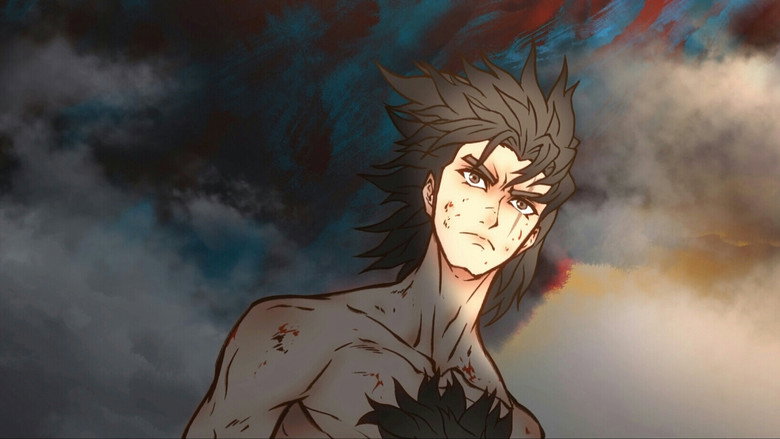
In a world divided by five elemental powers, a young man with fire abilities guards a mountain border against spirits. The plot is simple and openly mythological: a balance has been broken, and someone has to hold the line. What matters is how the story is told.
The first season is only a handful of episodes, and it functions as a proof of concept. The animation is hand-drawn, the backgrounds look like ink paintings, and the fight choreography is some of the best in Chinese animation.
Who should watch it
Best for: viewers who care about animation as craft and want to see what Chinese studios can do without a long commitment.
- You watch animation for the action, not the episode count.
- You like Chinese ink-painting aesthetics.
- You want a short, striking watch you can finish in an evening.
Skip it if you need a long, complex plot. This is a visual showcase first.
Three reasons to watch
1. The animation is hand-drawn
In an era of 3D and limited TV animation, the series uses drawn movement with visible weight. The result feels closer to a martial arts film than a cartoon.
2. The fights have geography
You always know where the characters are, what they are defending and how far they have to move. The camera serves the choreography instead of hiding it.
3. The colour design is unforgettable
Each elemental power has its own palette, and the clashes between them are composed like paintings. A single frame could hang on a wall.
The hidden culture detail
The five elements, wuxing (五行), are wood, fire, earth, metal and water. In Chinese thought they describe how things transform and balance each other, and they are used in medicine, divination and martial arts. The show treats them as a magic system, but the underlying logic is traditional: each element has a relationship with the others, and imbalance is the source of disaster. That is why the villains are not simply evil; they are a force that has been pushed out of proportion.
What the five elements look like on screen
The magic system is the visual system. Fire is orange and violent, water is blue and fluid, earth is heavy and slow, metal is sharp and cold, wood is green and growing. Because each element has its own palette, you can read a fight without understanding the dialogue. That is unusually considerate design for a show this stylised.
The strength of the series is that it treats elemental balance as a moral idea, not just a power list. A character who overuses one element is not simply strong; they are out of proportion, and the world pushes back. That is why the antagonists feel like natural disasters rather than villains with plans.
The hand-drawn animation is the reason to watch. Backgrounds are composed like ink wash paintings, and the camera moves with the brushwork rather than against it. In an industry increasingly dominated by 3D, the series is a reminder that line and colour can still do things that models cannot.
The fight choreography deserves its reputation. Weight, distance and momentum are all legible, and the show avoids the floating-camera problem that makes many action scenes weightless. You feel the ground when a character lands.
One thing to watch for is how the series uses negative space. Many frames leave large areas empty, and the fights are staged inside that emptiness rather than filling the screen with effects. The result feels closer to calligraphy than to a video game, and it is the clearest sign of the director's confidence.
The biggest limitation is length. The first season is short and functions as a pilot, and the story is nowhere near finished. If you need closure, this is not the show for you. If you can enjoy craft for its own sake, it is one of the most impressive pieces of Chinese animation available.
For viewers new to the concept, the five phases are simple: they generate and restrain one another in a cycle. The show does not lecture about it, which is exactly why it works. You learn the logic by watching the colours collide.
If you want to understand why Chinese animators are so respected right now, start here. It is short, beautiful and completely uninterested in explaining itself, which is both its strength and its limitation. Watch it on a screen big enough to see the brushwork. If you only have ten minutes, watch the opening fight and you will understand the reputation immediately. It is the best advertisement the series could ask for.
Where to watch
Licensed through Bilibili's international service where available. For a longer Chinese action series, read our The King's Avatar guide. For a comedy with martial arts, try Scissor Seven.
Where to watch officially
These buttons open the licensed platform's own search page for this drama. Availability changes by country, so the platform page is the final word on subtitles and regions.
No torrents, mirrors or Google Drive copies. If a link ever lands somewhere unofficial, tell us at yqin1090@gmail.com and we will replace it.