Xianxia Cdrama
The Untamed: The Friendship Story That Went Global
The series that built the global Cdrama fandom. A ghost-story structure wrapped around the most famous partnership in the genre.
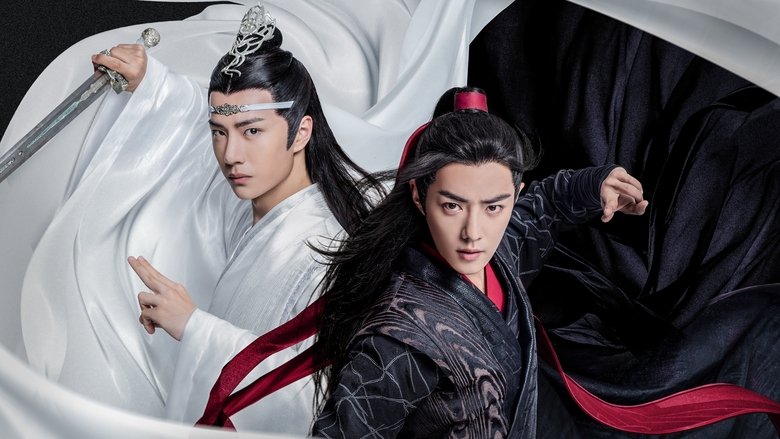
At a glance
- Chinese title
- 陈情令 (Chén Qíng Lìng)
- Released
- 2019, 50 episodes
- Setting
- Cultivation clans, a past war and a present mystery
- Starring
- Xiao Zhan, Wang Yibo
- Based on
- A novel by Mo Xiang Tong Xiu
- Official streaming
- Viki, Netflix (region dependent)
What it is about
Wei Wuxian, a brilliant and reckless cultivator, is dead at the start of the series. Sixteen years later he is brought back in another man's body, and the world has spent those years turning him into a villain. Lan Wangji, the disciplined second young master of the Gusu Lan clan, is one of the few people who never believed the story.
The series moves between the present investigation and a long flashback to the war that made Wei Wuxian notorious. It is a mystery, a war story and a love story, though the last one is told almost entirely through restraint and one very important piece of music.
Who should watch it
Best for: viewers who like slow-burn partnership, moral ambiguity and fantasy worlds with rules.
- You want the Cdrama that everyone references.
- You like stories where the heroes are wrong about something important.
- You are willing to sit through a confusing first two episodes; the flashback explains everything.
Skip it if you need explicit romance. The central relationship is intense but never labelled, partly because of Chinese broadcast rules.
Three reasons it holds up
1. The structure is a genuine mystery
The present-day investigation and the past war are cut together so that each answers a question raised by the other. By the time you understand what happened, you also understand why everyone remembers it differently.
2. Wei Wuxian is a tragic figure, not a misunderstood saint
He does real damage. The show is honest about the cost of his choices, which makes his return a question of justice rather than simple vindication.
3. Lan Wangji's restraint is the romance
He says very little. His loyalty is expressed through who he stands next to, what he refuses to say, and a song he will not play for anyone else. That restraint is the reason the relationship became so influential.
The hidden culture detail most viewers miss
The guqin, a seven-stringed zither, is not just a pretty instrument here. In Chinese literati culture it is associated with zhi yin (知音), "one who knows the sound": a friend who understands you without explanation. The phrase comes from a story about a musician who stops playing after his only true listener dies. When Lan Wangji plays for Wei Wuxian, the show is invoking that idea directly. It is also why the music can carry a confession that the dialogue cannot. In the original cultural vocabulary, someone who understands your music is already family.
How the two timelines fit together
The first two episodes are designed to disorient you. Wei Wuxian is dead, then he is alive in a stranger's body, and everyone he meets has already decided what he is. The show offers no explanation, because the explanation is the flashback that begins in episode three. If you are watching for the first time, accept the confusion and keep going. It is a deliberate structural choice, not bad writing, and it is what makes the reveal land.
The flashback is the real story. It covers the years when the cultivation clans were at war, when Wei Wuxian invented a new kind of magic and lost control of it, and when Lan Wangji chose, quietly and repeatedly, to stand beside him. Most of the emotional weight lives in those episodes. The present-day investigation only makes sense once you know what happened there, which is why the show withholds it.
A practical note on pacing. Fifty episodes sounds long, but the series is not padded the way many xianxia dramas are. The middle section does slow down around clan politics, and it helps to keep a mental note of which clan each character belongs to. The Jin, the Lan, the Jiang and the Nie all follow different rules, and the plot turns on those differences. If a scene feels like a meeting, it usually is one, and it usually matters later.
The present-day frame is not just a device. It lets the show ask what a reputation is worth. By the time Wei Wuxian returns, the world has spent sixteen years telling a story about him that is mostly wrong, and the drama is honest about the fact that being right does not undo the damage. That is why the ending feels earned rather than triumphant, and why viewers keep arguing about who was responsible for what.
One more reason to watch slowly: the costumes carry information. The Gusu Lan clan dresses in pale blue and white, the Jin in gold, the Jiang in purple, the Nie in dark greens. Once you notice the colour coding, crowd scenes become readable and you can tell at a glance who is allied with whom. The show rarely explains this, because its original audience already knew the visual grammar.
Where to go next
For a romance-first xianxia, read Love Between Fairy and Devil. For a longer, more melodramatic classic, see Ashes of Love. If you want reincarnation and heavenly politics, try Eternal Love.
Where to watch officially
These buttons open the licensed platform's own search page for this drama. Availability changes by country, so the platform page is the final word on subtitles and regions.
No torrents, mirrors or Google Drive copies. If a link ever lands somewhere unofficial, tell us at yqin1090@gmail.com and we will replace it.